
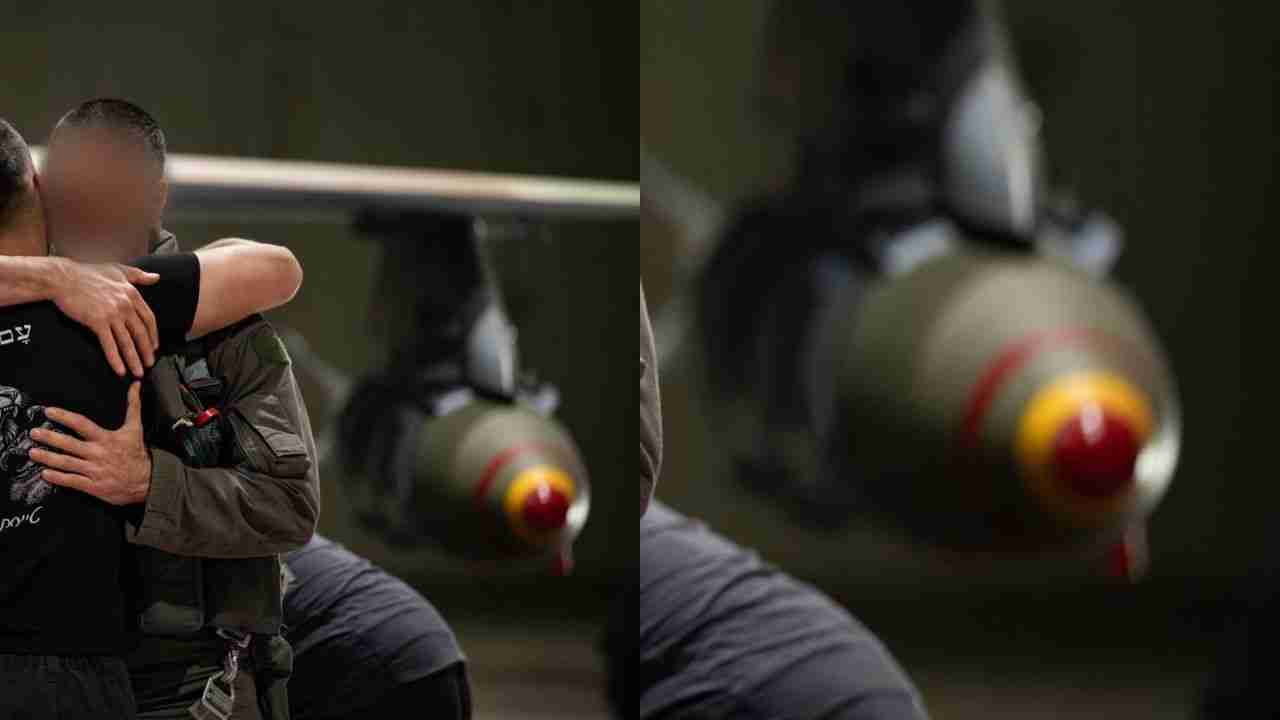
Images released by the Israeli Air Force indicate that an F-16 fighter jet may be using a little-known version of the JDAM guided bomb. In the photos, the aircraft appears carrying two GBU-31 bombs weighing about 907 kg, with unusual markings, including a red band on the front of the munition.
The images were posted on the air force’s social media accounts alongside reports of missions carried out deep inside Iranian territory, including over the capital Tehran.
The detail that drew the most attention from analysts is precisely the red marking. Under U.S. military standards, this type of identification may indicate an incendiary payload, something rare for JDAM bombs. The presence of a yellow band as well—traditionally associated with high-explosive charges—suggests that the weapon may combine different types of payload.
One hypothesis raised is that the bomb could be a variant similar to the BLU-119/B Crash PAD, developed in the early 2000s to neutralize stockpiles of chemical and biological weapons. This munition uses a combination of explosives and white phosphorus: the former ruptures containers storing hazardous substances, while the latter incinerates the contaminating material, reducing risks for civilians and the environment.
Experts also point out that Israel has a history of modifying U.S.-origin weapons to meet specific operational needs. As a result, the markings may indicate a proprietary JDAM version or a model adapted for specific targets in the current conflict. For now, however, the exact identity of the bomb remains unknown and continues to be the subject of speculation among military analysts.
+ US and allied submarines launch strategic operation in Arctic ice
Source: The War Zone | Photo: X @IAFsite | This content was created with the help of AI and reviewed by the editorial team
״אנו טסים לעומק שטח האויב ומעל עיר הבירה שלו, טהרן, בנחישות ועם תחושת שליחות עמוקה. לא נעצור.
צוותי האוויר מבצעים את משימתם הרחק מישראל, בסיכון גבוה, גם כשמערך ההגנה האווירי של האויב שיגר עליהם עשרות טילי קרקע-אוויר.צוותי הקרקע, הטייסים, והנווטים בבסיס פועלים סביב השעון, באומץ… pic.twitter.com/BMFGFL8X7a
— Israeli Air Force (@IAFsite) March 3, 2026
